


Reviews
Jacques Tourneur
USA, 1942
Credits
Review by Leo Goldsmith
Posted on 31 October 2005
Source Image Entertainment / Turner Laserdisc
Related articles
Features: 31 Days of Horror
Jenny / says:
I usually prefer my horror films post-1960, but the Val Lewton RKO series has a soft spot in my heart. Although it isn’t my favorite of the series today (more likely The Seventh Victim or I Walked With a Zombie), Tourneur’s Cat People simultaneously fascinated and frightened me at age 7. The combination of minimalist yet effective scare tactics along with Simone Simon’s tortured psychological state have remained glued in my mind for years since. Noting my partiality for horror films involving women and their sexual tribulations (especially since contributing to this feature), perhaps this was the film that started it all.
Leo / says:
Cruising for dames at the local zoo, all-American guy, Oliver Reed, meets a creepy Serbian, Irena Dubrovna, who seems to have a thing for cats. She likes to skulk around the panther cage, gazing upon the prowling beast, and making a few sketches of it with a sword piercing its torso. But today, she’s happy to be picked up by the charming Ollie, and decides to take him home for some tea and Serbian folklore in her dark apartment. They get along nicely, and in time they marry, in spite of the fact that Irena refuses to kiss her husband because she fears that she will turn into a rabid feline and maul him.
Female sexuality is a rich source of a certain kind of horror—the kind of horror that plays upon the anxieties that prudish bourgeois men have about their wives’ sex lives. Jacques Tourneur and Val Lewton’s 1942 classic, Cat People, exploits these fears about “ancient sin” and “corrupt passions” while also making use of popular concerns about the “atavism” of Eastern Europe. Ollie is an exceedingly regular guy, a stranger to unhappiness with an insatiable appetite for good ol’ American apple pie, and so his marriage to the slinky, brooding Irena is doomed from the start. Unable to drop her Serbian superstitions, naturalize, and “lead a normal life,” Irena retreats into herself, denying her husband even the most discreet of smooches. But of course, this prudishness has the adverse effect of driving her husband into the arms of another woman, and therefore, of inflaming Irena’s own feline-female jealousy and rage.
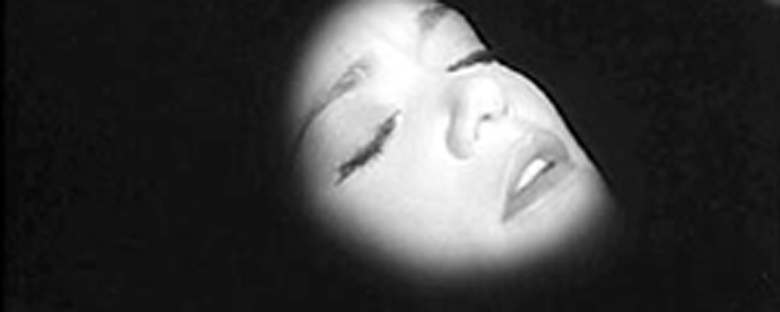
The genius of Cat People lies in its deceptive simplicity and its literal and figurative obscurity. The acting is rather cheesy, and the dialogue is often hilariously unsubtle (there’s a cat reference every three minutes), but what seems like a straightforward horror tale of metamorphosis and cruel animalistic drives rarely reveals itself in any obvious way. Simone Simon, in the role of Irena, is always as docile as a kitten, and we are unable to picture her as the savage pantheress she fears herself to be. The film plays a skillful game with its audience, neither fully giving nor withholding an image of the dreaded cat-woman. Instead, deep in the rich, chiaroscuro lighting of the film, the viewer sees — or thinks he sees — the shadows of a beast lurking and prowling toward its victim. Tourneur’s film thus utilizes a literal inscrutability that tests the viewer’s ability to discern what is in the frame.
We don’t do comments anymore, but you may contact us here or find us on Twitter or Facebook.