

Reviews

Robert Bralver/David Ferino
USA, 2011
Credits
Review by Katherine Follett
Posted on 11 May 2011
Source Projected DVD
Categories The 2011 Independent Film Festival Boston
No other band sounds quite like Morphine. The baritone sax, drums, and Mark Sandman’s 2-string slide bass and sultry voice are unmistakable from the very first notes. The documentary Cure for Pain: The Mark Sandman Story aims to bring us the dramatic life behind Sandman’s distinctive music. Alas, the technique does not live up to the tale. The movie falls somewhere between not revealing enough and revealing too much, leaving many questions about Sandman’s life unanswered, and raising one big, possibly unanswerable one: Does the mere fact of being an artist make a person’s life story a compelling one?
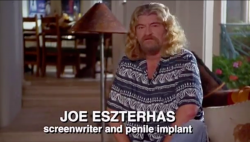
Cure for Pain clearly has great affection for Sandman and the people in his life, but the filmmakers’ lack of technical skill does them a great disservice. Many of the interviews are badly lit, blurry, and awkwardly composed, with interview subjects slipping in and out of frame and focus. (Other interviews look great, leading one to think that the poor ones are mistakes rather than an intentional style.) The sound recording is especially bad; several of the interviews require subtitles, and one of the most charismatic subjects, Morphine saxophonist Dana Colley, nearly has his microphone overwhelmed by the relentless chirping of birds in his suburban backyard. The archival footage and pictures are also of poor quality, with photographs zoomed on so far that they become a mass of printing dots and video bearing the wobbly distortion of an overplayed VHS tape. Some of these faults are beyond the filmmakers’ control: much of the early footage of the band and Sandman’s previous projects were shot in dark bars with crappy camcorders in the late 80s; it can’t be helped. But other flaws feel like a lack of skill or research. Surely the filmmakers could have gone to the trouble to obtain original photographs, rather than filming magazine prints. And they could have found a more visually compelling way to reveal information than close-ups of sloppily highlighted text.
You can get past technique if the topic is compelling enough. It seems, on the surface, as if Sandman’s life would make a profoundly compelling film. The child of an average middle-class family from Newton, Massachusetts, Sandman endured the death of both his younger brothers as he struggled to become a musician. Just when his unusual and uncompromising sound found an audience, Sandman himself suddenly passed away, suffering a heart attack on stage when he was only 47. (Despite the drug use implied by the band’s name, Sandman’s death was ruled, in medical terms, “just one of those things.”)
But Cure for Pain is fundamentally unsatisfying for reasons that even the most skilled filmmakers couldn’t have helped. Sandman’s life may simply not want to become a film. Sandman was a notably private person, and it’s completely understandable that those closest to him are reluctant to put their relationships, and their grief, on display for the public. (Except for a melodramatic Ben Harper, that is, who can’t seem to get enough.) The filmmakers, too, seem content to get a few facts without digging any deeper. We learn that the Sandman family suffered the tragic loss of two children, but almost nothing about how those deaths affected his life and music. We learn that Sandman held a variety of nomadic and unusual jobs, including at a cannery in Alaska, but no one knows or says much about that time in his life. We see how painfully disconnected Sandman was from his parents (they seemed to have absolutely no idea that their son was an established and celebrated musician), but the interviewer never presses them to find out how they feel about that distance.
Learning this much and no more about Sandman’s life makes one question whether we want to know anything at all. I think it’s fair to call Morphine “musicians’ musicians.” While their music is a joy to listen to, the joy feels more like a deep admiration of technique rather than a passionate and personal emotional connection. Morphine’s music is good because of its sound; it’s no coincidence that the film suddenly looks a lot better when the band’s undeniable cool slinks out of the soundtrack. That sound itself is aloof, chill, and sexy, the kind of vibe that benefits far more from Sandman’s cultivated air of mystery than from a documentarian’s cause-and-effect revelations. Sandman’s biography, as tragic as it was, isn’t audible in his music the way someone like Kurt Cobain’s was. And the tragedies of his life feel like the sad, private, and personal tragedies of a flesh-and-blood family, not the mythic plot twists of your typical music bio.
In some ways, this is morally comforting. Sandman was a real human being, not a character in a celebrity role-play so familiar it’s become cinematic cliché. But trying to make a documentary about this real human being whose only remarkable aspect was his art puts the filmmakers—and the viewer—in an uncomfortable spot. Why do we feel the need to know about lives of people who make good art? Why do we believe the music is more meaningful if those lives were difficult or painful? Is it possible that the art would be better if it stood on its own, away from any details or preconceptions about the person who made it?
I’ve possibly thought a lot more about Cure for Pain and its implications than the filmmakers intended. The movie itself comes off as a well intentioned, somewhat amateurish, and possibly too-respectful tribute to an artist the filmmakers admired. I was sorry to miss the “Rock Docs” panel discussion, at which questions like these may have been brought up. But this unanswered question was my main response to Cure for Pain, and in that sense, it was a powerful and provocative documentary. Whatever its flaws, Cure for Pain makes you appreciate Morphine, and music as a whole, for its own sake and on its own terms, despite—not because of—the acute sadness of Sandman’s life.
More The 2011 Independent Film Festival Boston
-

13 Assassins
2010 -

Ivan & Ivana
2011 -

Being Elmo: A Puppeteer’s Journey
2011 -

Bellflower
2011 -

Convento
2011 -

Cure for Pain: The Mark Sandman Story
2011 -

The Trip
2010 -

El Bulli
2010 -

Submarine
2010 -

Stake Land
2010 -

Another Earth
2010 -

If a Tree Falls
2011 -

Terri
2011 -

The City Dark
2011 -

Littlerock
2010 -

Superheroes
2011 -

Hot Coffee
2011 -

Conan O’Brien Can’t Stop
2011
We don’t do comments anymore, but you may contact us here or find us on Twitter or Facebook.