


Reviews
Mirage
Werner Herzog
West Germany, 1971
Credits
Review by Leo Goldsmith
Posted on 14 December 2004
Source Anchor Bay Entertainment DVD
Related articles
Features: Directors: Werner Herzog
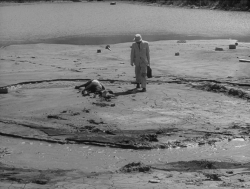
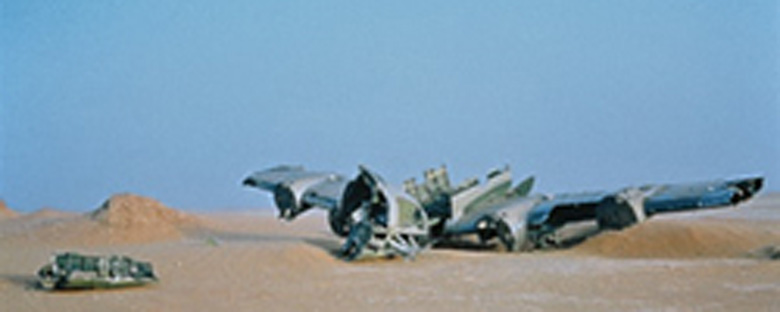
The strange nature of Werner Herzog’s style is such that his fiction films seem like documentaries and his documentaries seem like science fiction. Fata Morgana falls into the latter category. Wandering around the Sahara Desert in order to film mirages, Herzog compiled a mass of hallucinatory footage documenting a barren, alien landscape and a civilization pockmarked by the assault of technology and colonialism. Exotic animals, gutted structures, rusting vehicles, orientalist tourists and their bewildered subjects—each is a fragment of a hazy and disassembled culture mapped onto a desert wasteland.
In its attempt to capture the natural phenomena of illusion, Fata Morgana also creates its own obscurities, compressing time and space into a forbidding, but curiously familiar heterocosm. Post-apocalyptic visions are accompanied by readings (by German film historian Lotte Eisner) from Mayan cosmogonies on the soundtrack. Similarly, the film’s musical cues conflate geography and culture, contrasting classical music (Mozart and Handel), contemporary Western rock (Leonard Cohen and Blind Faith), African hymns, and rudimentary brothel tangos. Even Herzog’s footage of natural wonders and morphing psychedelic landscapes lacks perspective and scale, as though viewed from the window of an airplane or through a microscope.
We don’t do comments anymore, but you may contact us here or find us on Twitter or Facebook.