


Reviews
Stestí
Bohdan Sláma
Czeck Republic, 2005
Credits
Review by Beth Gilligan
Posted on 12 October 2005
Source Bontonfilm 35mm print
Related articles
Features: The 43rd New York Film Festival
The characters in Bohdan Sláma’s new film, Something Like Happiness, wear an expression of grim resignation across their faces. Mired in a dingy industrial town in the Czech Republic, they seem utterly lacking in hope or ambition. This may sound dire, but Sláma is careful to allow humor to filter into these scenes of everyday dreariness, crafting a portrait of a society that owes much to the British kitchen-sink dramas of the postwar years. Despite this impressive milieu, however, the director stumbles, crafting a picture fueled not by his characters’ rage and frustration (as films like Saturday Night and Sunday Morning and Look Back in Anger were), but by their complacency. Although there’s something to be said for the latter approach, in this case it does little more than stir up the same feeling from the audience.
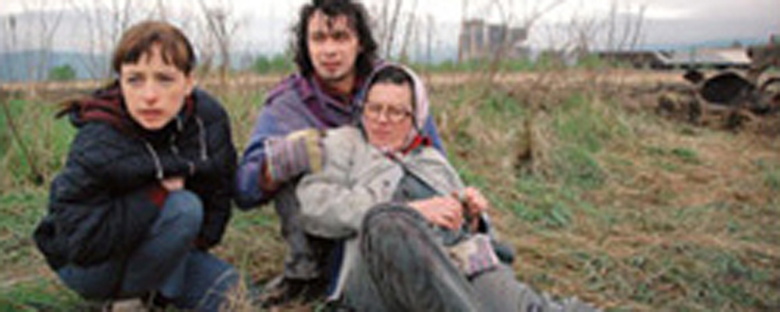
Adding to the sense of claustrophobia that permeates the characters’ lives, a large portion of the action takes place in the housing development in which they live. Twenty-something Monika still has a bedroom in her parents’ apartment, but dreamily anticipates the day her boyfriend Jara, who has recently moved to San Francisco, will invite her there to live with him. While she is waiting, she spends most of her time with Tonik, Jara’s best friend who is secretly in love with her, and Dasha, the troubled single mother who lives above her. As Dasha’s mental condition deteriorates (unlike the others in her building, she has trouble accepting her bleak situation), Tonik and Monika find themselves stepping into the role of surrogate parents to Dasha’s two small children.
In a way, Something Like Happiness is a fundamentally conservative film. Tonik and Monika, with their understated goodness, are positioned as the moral centers of the film, their blithe willingness to settle extolled. Dasha and Jara, on the other hand, are either dismissed or derided for their ambitions for a life beyond their grimy surroundings. Sláma’s attitude towards Jara’s migration to California may well be a response to the vast influence the U.S. has wielded on Eastern Europe since the fall of Communism, but his harsh handling of Dasha’s mental breakdown and its aftermath remains somewhat inexplicable.
Still, the film gains steam as it moves along, allowing Sláma to showcase his talent for rendering quiet moments of affection between his characters. In the end, it is these, along with the gloomy urban landscapes, that make a lasting imprint.
We don’t do comments anymore, but you may contact us here or find us on Twitter or Facebook.